

Discover how high net worth wealth management helps affluent individuals grow, protect, and transfer wealth through investment management, tax planning, estate planning, and personalized financial strategies.
High Net Worth Wealth Management: A Complete Guide for Affluent Individuals
Managing significant wealth requires more than basic investing. As assets grow, financial decisions become increasingly complex, involving investment management, tax planning, estate planning, risk management, and wealth transfer strategies. This is where high net worth wealth management becomes essential.
High net worth wealth management is a specialized financial service designed for individuals and families with substantial assets. It combines comprehensive financial planning with personalized investment strategies to help preserve, grow, and transfer wealth efficiently across generations.
Whether you are a successful entrepreneur, corporate executive, business owner, or affluent family, understanding how wealth management works can help you make informed financial decisions and achieve long-term financial security.
What Is High Net Worth Wealth Management?
High net worth wealth management refers to a comprehensive approach to managing the financial affairs of affluent individuals who possess significant investable assets.
Unlike traditional financial planning, wealth management focuses on multiple aspects of wealth creation and preservation, including:
- Investment management
- Tax optimization
- Estate planning
- Retirement planning
- Risk management
- Wealth transfer strategies
- Philanthropic planning
The primary objective is not only to increase wealth but also to protect it from unnecessary risks, taxes, and inefficient financial decisions.
Who Qualifies as a High Net Worth Individual (HNWI)?
Financial institutions generally classify individuals based on their investable assets.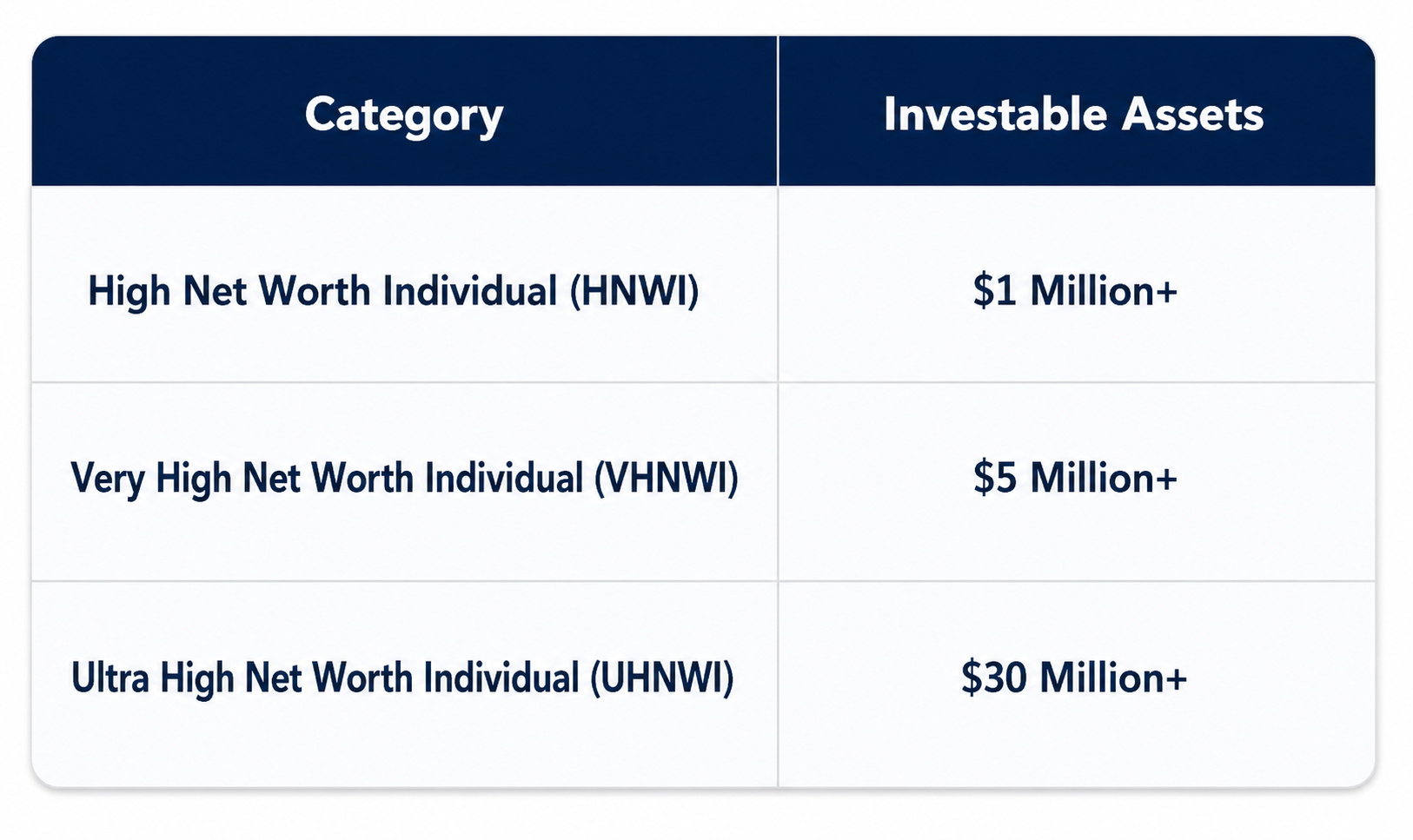
In India, HNWIs often include business owners, startup founders, senior executives, professionals, and families with substantial investments in real estate, equities, mutual funds, and private businesses.
Why High Net Worth Individuals Need Specialized Wealth Management
As wealth increases, financial complexity grows. Managing multiple investments, tax obligations, business interests, and family wealth requires a structured approach.
1. Complex Financial Portfolios
Many affluent individuals hold diversified assets such as:
- Equities
- Mutual funds
- Bonds
- Real estate
- Alternative investments
- Private equity
- International investments
Coordinating these investments requires expertise and ongoing monitoring.
2. Tax Efficiency
Taxes can significantly impact long-term returns. Wealth management strategies help optimize tax liabilities through:
- Tax-efficient investing
- Capital gains planning
- Tax-loss harvesting
- Trust structures
- Estate planning techniques
3. Wealth Preservation
Growing wealth is important, but preserving it is equally critical. Wealth managers focus on protecting assets against:
- Market volatility
- Inflation
- Legal risks
- Economic downturns
- Family disputes
4. Succession Planning
Without a proper plan, transferring wealth to future generations can become challenging. Estate planning ensures assets are distributed according to the family’s wishes while minimizing complications.
Key Services Included in High Net Worth Wealth Management
Investment Management
Investment management forms the foundation of any wealth management strategy.
Services typically include:
- Portfolio construction
- Asset allocation
- Diversification strategies
- Risk assessment
- Ongoing portfolio monitoring
The objective is to create a portfolio aligned with the client’s goals, risk tolerance, and investment horizon.
Financial Planning
A comprehensive financial plan provides a roadmap for achieving financial objectives.
Areas covered include:
- Retirement planning
- Education planning
- Cash flow management
- Goal-based investing
- Major life events planning
Tax Planning
Tax planning can substantially improve long-term wealth accumulation.
Common strategies include:
- Tax-efficient asset allocation
- Capital gains management
- Income tax optimization
- Business tax planning
- Trust and estate tax strategies
Estate Planning
Estate planning ensures a smooth transfer of wealth to heirs and beneficiaries.
Components may include:
- Wills
- Trusts
- Power of attorney
- Beneficiary planning
- Family governance structures
Risk Management
Protecting wealth is a critical component of financial success.
Risk management strategies may involve:
- Insurance planning
- Liability protection
- Asset protection structures
- Emergency liquidity planning
High Net Worth Wealth Management Strategies
Strategic Asset Allocation
Asset allocation remains one of the most important drivers of investment success.
A diversified portfolio may include:
- Domestic equities
- International equities
- Fixed income securities
- Real estate
- Alternative investments
- Cash reserves
Proper diversification helps reduce risk while improving long-term returns.
Tax-Efficient Investing
Tax-efficient investing focuses on maximizing after-tax returns.
Examples include:
- Holding investments for the long term
- Utilizing tax-advantaged accounts
- Managing capital gains strategically
- Rebalancing portfolios efficiently
Alternative Investments
Many HNWIs allocate a portion of their portfolio to alternative investments such as:
- Private equity
- Venture capital
- Hedge funds
- Real estate funds
- Infrastructure investments
These assets may offer diversification benefits and potential for enhanced returns.
Wealth Transfer Planning
Successful wealth transfer requires careful planning.
Strategies often include:
- Family trusts
- Gifting strategies
- Succession planning
- Intergenerational wealth education
Family Office Services
Ultra-high-net-worth families often establish family offices to manage complex financial affairs.
Family office services may include:
- Investment oversight
- Tax coordination
- Estate planning
- Philanthropic planning
- Lifestyle management
High Net Worth Wealth Management vs Traditional Wealth Management
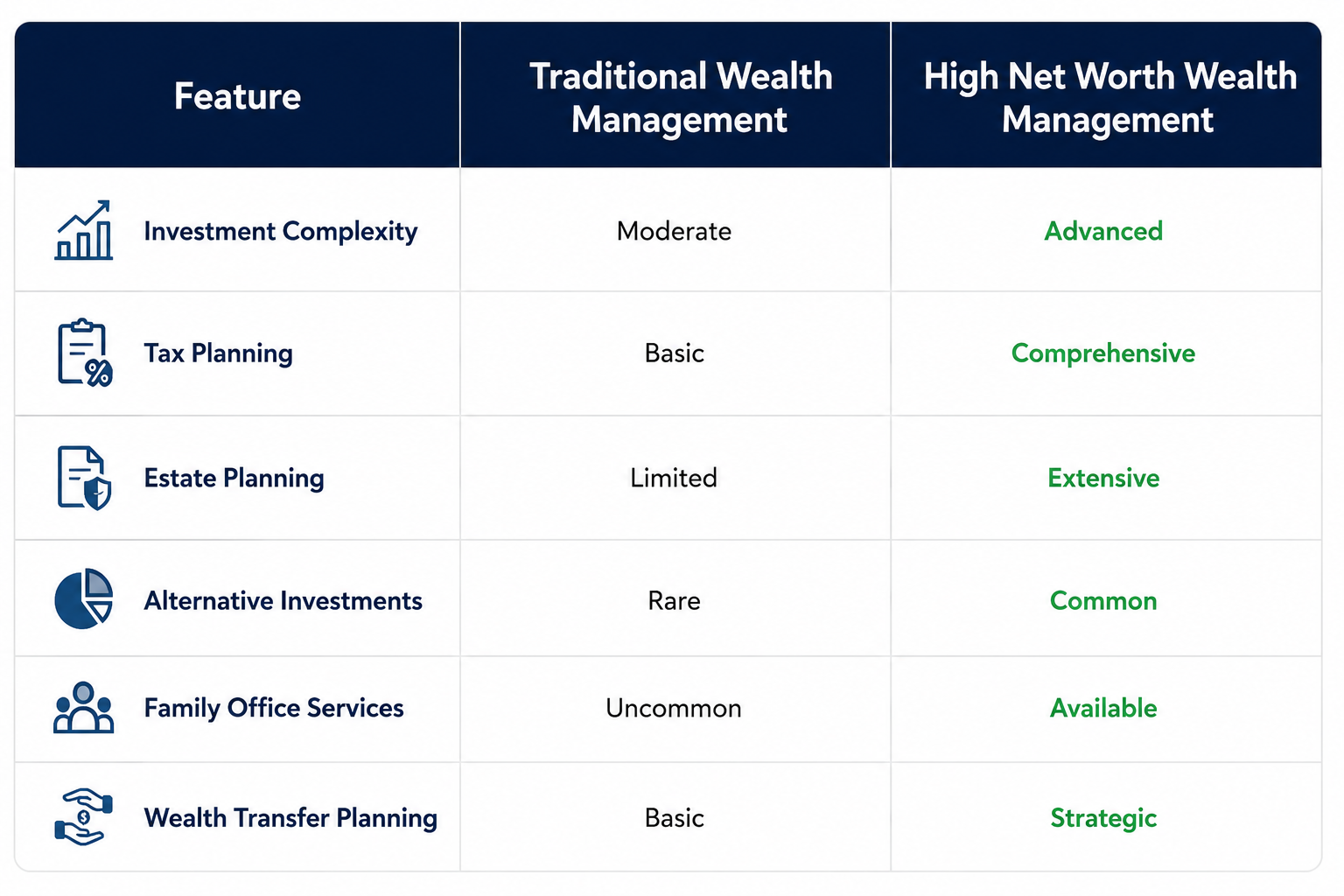
High net worth wealth management provides a more personalized and sophisticated approach to managing substantial assets.
Common Challenges Faced by High Net Worth Individuals
Market Volatility
Large portfolios are often exposed to significant market fluctuations. Strategic diversification can help manage risk.
Inflation
Inflation reduces purchasing power over time, making growth-oriented investment strategies essential.
Concentrated Asset Risk
Business owners and executives may have excessive exposure to a single company or industry.
Estate Complexity
Large estates often require sophisticated planning to ensure efficient wealth transfer.
Tax Burden
Higher income and larger portfolios can create substantial tax obligations without proper planning.
How to Choose a High Net Worth Wealth Manager
Selecting the right wealth manager can have a significant impact on long-term financial success.
Consider the following factors:
Experience
Look for professionals with experience serving affluent individuals and families.
Fiduciary Responsibility
A fiduciary advisor is obligated to act in the client’s best interests.
Comprehensive Services
Choose a firm that offers:
- Financial planning
- Investment management
- Tax planning
- Estate planning
- Risk management
Transparent Fee Structure
Understand how the advisor is compensated and ensure fees are clearly disclosed.
Personalized Approach
Every client has unique goals, risk tolerances, and family circumstances. Personalized advice is essential.
Wealth Management Trends for High Net Worth Individuals
The wealth management industry continues to evolve.
Key trends include:
- Digital wealth management tools
- Artificial intelligence-driven portfolio analysis
- Sustainable and ESG investing
- Global diversification
- Increased focus on tax efficiency
- Family governance planning
Affluent investors increasingly seek holistic financial solutions that integrate technology with personalized advice.
Frequently Asked Questions
What is considered high net worth?
A high net worth individual generally has at least $1 million in investable assets, excluding their primary residence.
What does a high net worth wealth manager do?
A high net worth wealth manager provides investment management, financial planning, tax planning, estate planning, and wealth preservation services for affluent individuals and families.
How much money do you need for wealth management?
Minimum requirements vary by firm. Some wealth managers require $500,000 in investable assets, while others focus on clients with $1 million or more.
Is wealth management worth it?
For affluent individuals with complex financial situations, professional wealth management can help improve investment outcomes, reduce taxes, and support long-term wealth preservation.
What is the difference between private banking and wealth management?
Private banking focuses primarily on banking services, lending, and credit solutions, while wealth management provides comprehensive financial planning and investment advice.
How do high net worth individuals reduce taxes?
Common strategies include tax-efficient investing, capital gains planning, trust structures, charitable giving, and strategic asset allocation.
Conclusion
High net worth wealth management goes far beyond investment advice. It is a comprehensive approach to preserving, growing, and transferring wealth while addressing the unique challenges faced by affluent individuals and families.
From investment management and tax planning to estate planning and wealth preservation, a well-structured wealth management strategy can help high net worth individuals achieve financial security and build a lasting legacy.
As financial markets become increasingly complex, partnering with an experienced wealth management firm can provide the expertise, guidance, and personalized strategies needed to navigate today’s financial landscape with confidence.
At Nbhava Capital, we believe that successful wealth management is not simply about growing assets—it is about aligning financial decisions with your long-term goals, values, and legacy.
