

Introduction
Managing money can feel overwhelming. You might need help with retirement planning, investments, or taxes. This is where a certified financial advisor can help you. A certified financial planner can guide you through important money decisions and help you build a secure future.
But how do you find the right advisor? What services do they offer? And what will it cost? This guide answers all your questions. We explain everything in simple English. Whether you are just starting or planning for retirement, this information will help you make smart choices.
What Is a Certified Financial Advisor?
A certified financial advisor helps people manage their money. They create plans to meet your financial goals. The most trusted type is a Certified Financial Planner (CFP) .
A CFP is the “gold standard” of financial planning. They complete years of training and pass a tough exam. They also have work experience and follow strict ethics rules.
What makes a CFP special? They must act as a fiduciary. This means they put your interests first, always. They cannot recommend products just to earn a commission. They must recommend what is truly best for you.
Other advisors may only follow a “suitability” standard. They only need to suggest products that are “suitable” for you, not necessarily the best option. This is a big difference. A certified financial advisor with a CFP is legally required to act in your best interest.
Services Offered by a Certified Financial Advisor
A certified financial advisor offers many services. They look at your whole financial picture, not just investments. Here is what they can help with:
- Retirement Planning: They help you save for retirement. They decide how much to save and where to invest. They also plan when to take Social Security.
- Investment Planning: They build a portfolio that fits your goals. They manage your investments and adjust them when needed.
- Tax Planning: They find ways to lower your taxes. This includes smart investing and tax-efficient withdrawals.
- Estate Planning: They help you plan how to pass money to your family. They work with lawyers to create wills and trusts.
- Insurance Planning: They review your insurance needs. They make sure you are protected against unexpected events.
- Budgeting and Saving: They help you build healthy money habits. They create budgets and savings plans.
- Debt Management: They help you pay off debt faster.
A certified financial advisor provides comprehensive financial planning. They cover everything from cash flow to estate plans. This is why many people prefer a CFP over other advisors.
Benefits of Hiring a Certified Financial Advisor
There are many benefits to hiring a certified financial advisor. Here are the top reasons why people work with them:
1. They Are Fiduciaries
This is the biggest benefit. A certified financial advisor with a CFP is legally required to act in your best interest. They must recommend what is best for you. They cannot push products for higher commissions. This builds trust and gives you peace of mind.
2. They Have Deep Expertise
CFPs complete rigorous training. They must pass a comprehensive exam and meet experience requirements. This shows they have in-depth knowledge of many financial areas. They stay current through continuing education.
3. They Create a Custom Plan
No two people have the same needs. A certified financial advisor creates a plan just for you. They consider your goals, age, income, and risk tolerance. They do not give one-size-fits-all advice.
4. They Offer Holistic Advice
They look at your whole financial life. They connect all the pieces: investments, taxes, insurance, and estate planning. They show you how each part affects the others. This gives you a complete picture.
5. They Provide Peace of Mind
Money can be stressful. A certified financial advisor takes the guesswork out of your finances. They give you clear direction. You feel more confident about your financial future.
Who Needs a Certified Financial Advisor?
You might think you need millions of dollars to hire an advisor. This is not true. Many people can benefit from professional financial advice. Here is who should consider a certified financial advisor:
- People Nearing Retirement: Retirement planning is complex. An advisor helps you figure out Social Security, withdrawals, and Medicare.
- Anyone with Multiple Goals: You might be saving for a house, college, and retirement at the same time. An advisor helps you prioritize and balance these goals.
- Busy Professionals: You may not have time to manage your investments. An advisor handles it for you.
- People Who Feel Unsure: If you are confused about money, an advisor brings clarity. They explain things in simple terms.
- Those with a Major Life Change: Getting married, divorced, or receiving an inheritance changes your finances. An advisor helps you navigate these events.
You do not need a complicated situation. Even a yearly check-in with a certified financial advisor can help you stay on track.
How to Choose the Right Certified Financial Advisor
Choosing a certified financial advisor is a big decision. You are trusting them with your financial future. Follow these steps to find the right fit:
Step 1: Understand the Types of Advisors
There are many types of financial professionals. Here are the most common:
- Certified Financial Planner (CFP): Best for holistic financial planning. They are fiduciaries.
- Registered Investment Advisor (RIA): Focuses on investment management. They are also fiduciaries.
- CPA: Specializes in taxes. They can prepare returns and offer tax advice.
- Wealth Manager: Often works with high-net-worth clients.
A certified financial advisor with a CFP is the best choice for most people.
Step 2: Understand the Fees
Advisors charge in different ways. You need to understand how they get paid:
- Fee-Only: They only charge you directly. This is the best option because it has the fewest conflicts. They may charge an hourly fee, a flat fee for a plan, or a percentage of assets under management (AUM) (usually around 1%).
- Fee-Based: They charge fees but also earn commissions. This can create conflicts of interest.
- Commission-Only: They only make money when you buy products. This has the most conflicts.
Always ask, “How do you get paid?” A good advisor will give you a clear answer.
Step 3: Check Credentials
Use free online tools to check an advisor’s background:
- CFP Board Website: Check if they hold a CFP and if they have a disciplinary record.
- FINRA BrokerCheck: Check their employment history and if they have any issues.
- SEC Investment Adviser Public Disclosure: Check registration and disciplinary history.
Doing this research protects you from bad actors.
Step 4: Ask Important Questions
Before hiring a certified financial advisor, ask these questions during a free consultation:
- Are you a fiduciary at all times?
- How do you get paid? What are your fees?
- What credentials do you hold?
- How often will we meet?
- What is your experience with people like me?
- How do you make investment recommendations?
Pay attention to how they communicate. Do they use simple language or confuse you with jargon? A good advisor empowers you with understanding.
Certified Financial Advisor vs Financial Planner
Many people use these terms interchangeably. But there are important differences:
What is a Financial Planner?
A financial planner helps you create a plan for your money. They cover budgeting, saving, and investing. But anyone can call themselves a financial planner. There is no legal requirement for training.
What is a Certified Financial Advisor (CFP)?
A CFP is a specific type of financial planner. They have extra training and testing. They must pass a rigorous exam and have years of experience. They also must follow strict ethics rules and act as a fiduciary.
Key Differences
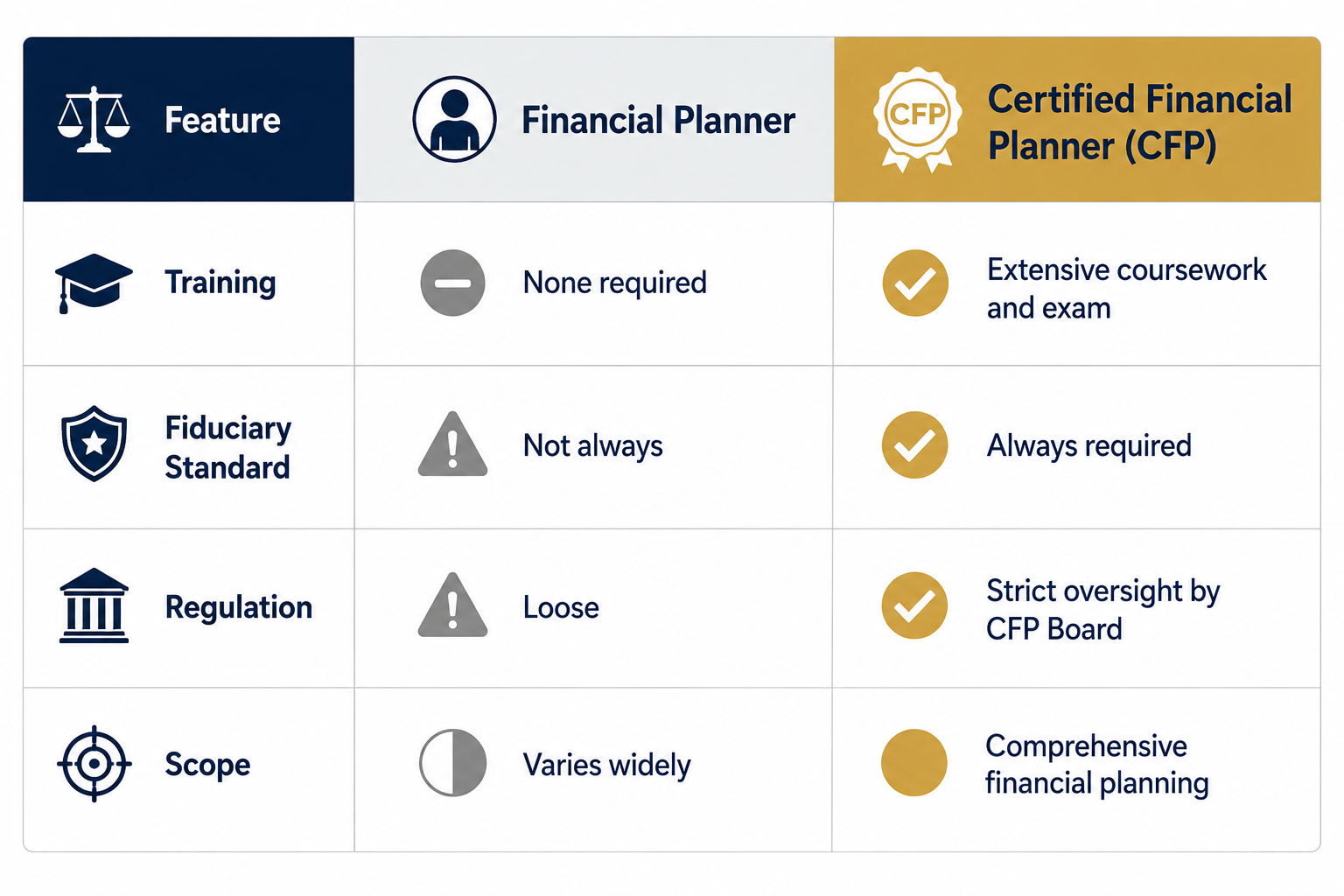
In short: All CFPs are financial planners, but not all financial planners are CFPs. A CFP has proven their expertise. They are the most trusted choice.
Some people confuse a CFP with a CFA (Chartered Financial Analyst). A CFA focuses on investment analysis and often works for large firms. A CFP focuses on helping individuals with holistic financial planning. For most people, a CFP is the better choice.
Certified Financial Advisor Cost
The cost of a certified financial advisor varies. It depends on how they charge and the complexity of your finances. Here is a breakdown of typical fees:
1. Percentage of Assets Under Management (AUM)
This is a common fee structure. You pay a percentage of the money they manage for you. The average industry fee is around 1%. This can be higher or lower. As your assets grow, the percentage often goes down.
2. Flat Fee
You pay a fixed price for a service. For example, you might pay a flat fee for a comprehensive financial plan. This can range from $2,000 to $10,000. You might also pay a retainer for ongoing service.
3. Hourly Fee
You pay for the time the advisor spends working for you. This is good if you need one-time advice. Hourly rates vary widely.
4. Commission-Based
This is not recommended. The advisor earns money when they sell you a product. This creates a conflict of interest. They are incentivized to sell, not to give the best advice.
A fee-only certified financial advisor is the best choice. They have the fewest conflicts of interest. You know exactly what you pay and what you get.
Conclusion
A certified financial advisor can transform your financial life. They provide expert guidance, comprehensive planning, and peace of mind. The most trusted type is a Certified Financial Planner (CFP). They must act as a fiduciary and put your interests first.
When choosing an advisor, look for a fee-only CFP. Ask about their fees and if they are a fiduciary. Check their credentials online. And always ask questions during a free consultation.
The right certified financial advisor is a partner in your success. They help you navigate the complex world of money with confidence. Take the first step today. Your future self will thank you.
